

How to Transfer a Bakery Business: A Complete Step-by-Step Guide
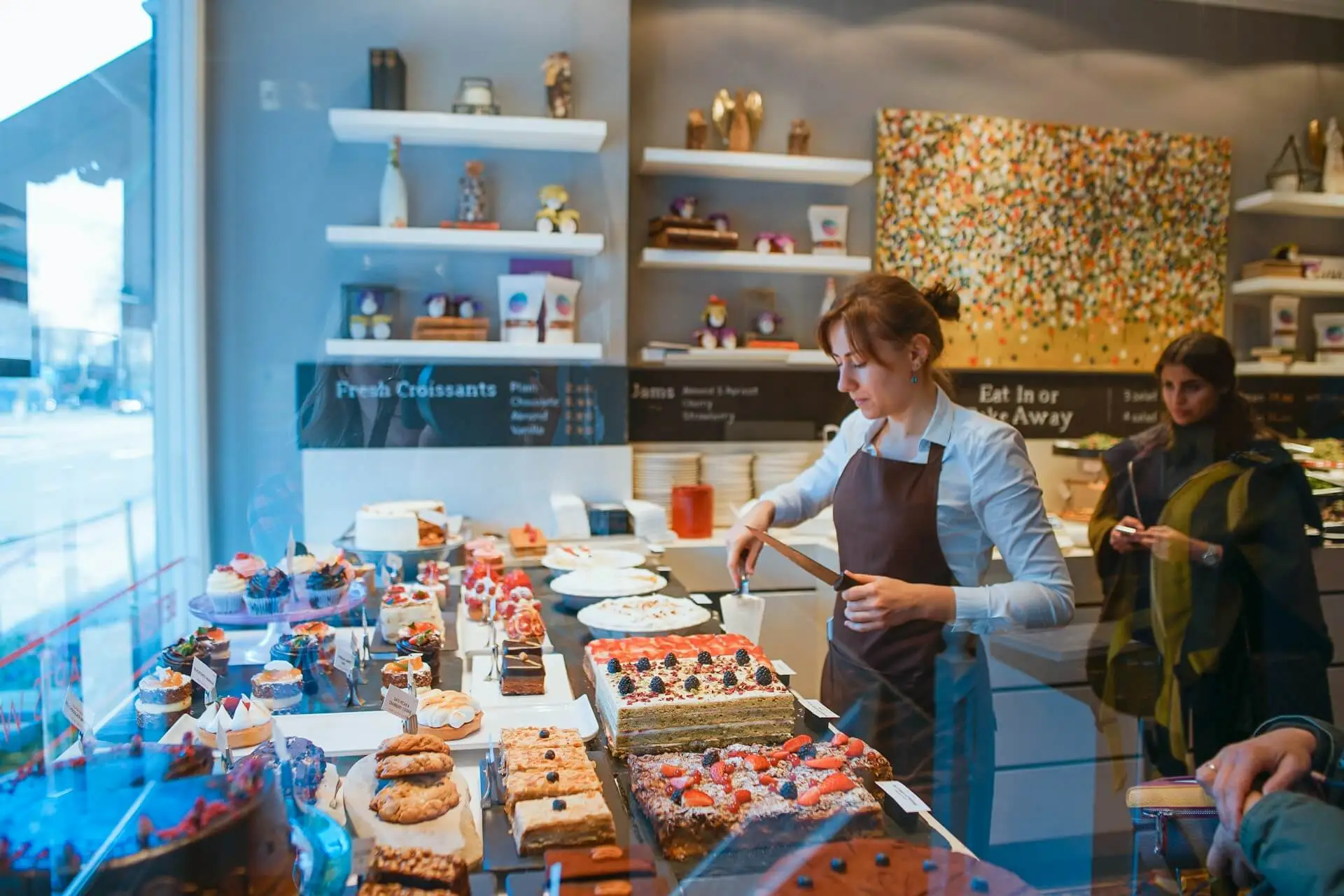
Deciding to sell a bakery is a complex step that mixes emotional factors with financial and legal challenges. Unlike other hospitality businesses, a bakery doesn't just transfer premises and a licence; it transfers specific know-how, proprietary recipes and neighbourhood customer loyalty that are the true drivers of profitability.
If you are wondering how to transfer a bakery without losing money in the process and ensuring the continuity of the legacy you've built, this guide is for you. We analyse the 2026 market situation and break down the fiscal and legal operations necessary to close the deal with full guarantees.
Is it a good time to sell your bakery? Market Situation
The bakery and pastry sector in Spain has evolved towards a model of specialisation. In 2026, investors are looking for businesses that have already overcome the "commoditisation" barrier. This means there is high demand for transfers of artisanal bakeries, workshops (obradores) with all licences in order and establishments with on-site tasting areas.
Knowing how to sell a bakery at the right time is key. If your business has updated machinery (efficient ovens, controlled fermentation chambers) and stable turnover, you are in a strong position to negotiate. Today's buyers value immediacy: they want to start working the day after signing without needing structural renovations.
Business Valuation: How much is my bakery worth?
The number one mistake when considering a bakery transfer is setting the price based on what you invested years ago or on sentimental value. The market price consists of tangible and intangible assets.
Valuation of tangible assets: Machinery and furniture
In a bakery, tangible fixed assets carry enormous weight. You must conduct a detailed inventory and apply realistic depreciation. The most valued elements in a transfer include:
- Workshop machinery: Ovens (deck, rotary or convection), arm or spiral mixers, sheeters and fermentation chambers.
- Refrigeration: Blast chillers, freezing cabinets and display cases (critical for impulse sales).
- Technical installations: Certified smoke extraction (a critical and hard-to-get asset in urban centres today) and climate control systems.
Valuation of intangibles: Goodwill, recipes and clientele
This is where the true value lies when selling a bakery. A buyer isn't just paying for an oven; they are paying for that oven's ability to generate money from day one. You must quantify:
- Recipe Book and Technical Sheets: Are you going to transfer your master formulas? This can increase the transfer price by 15% to 20%.
- Recurring customer base: Provable turnover from the last 3 years.
- Brand reputation: Social media positioning and local platform reviews.
Effective methods to calculate the final transfer price
A mixed method is usually used. The liquidation value of the machinery (second-hand market) is added to a multiplier of the annual net profit (EBITDA). In the bakery sector, multipliers between 2 and 4 times the annual profit are common, depending on location and the state of the premises.

Looking to sell or transfer your business?
Publish it easily and connect with people interested in starting their own business, with the level of confidentiality you choose.
Publish nowRequired Paperwork and Documentation for the Transfer
To understand how to transfer a bakery safely, the bureaucracy must be flawless. Any irregularity can turn off an investor during Due Diligence.
Activity Licence and health permits
This is the most important legal asset. You must go to the Town Hall to request a certificate of urban compatibility or ensure the licence has no open disciplinary proceedings. In bakeries, it is vital to verify that the licence covers both sales (retail) and manufacturing (workshop), and if applicable, tasting (hospitality).
Lease Agreement: Assignment and landlord rights
Most bakeries operate in rented premises. The Ley de Arrendamientos Urbanos (LAU, Spain's urban tenancy law) allows the transfer (assignment of the contract) without the landlord's consent (unless otherwise agreed), but the landlord has the right to:
- Be formally notified within one month of the signing.
- Increase the monthly rent by 20%.
Reviewing your current contract is the first step before putting the business up for sale.
Financial Audit: What documents will buyers ask for?
Prepare a "sales folder" with:
- Quarterly VAT models (303) and annual summaries (390).
- Income Tax or Corporate Tax filings.
- List of suppliers and raw material costs.
- Utility contracts (electricity, gas, water) up to date with payments.
Taxation: What taxes are paid when transferring a bakery?
Knowing how to sell a bakery also involves knowing how much the Agencia Tributaria (the Spanish tax authority) will take from the operation.
VAT and ITP Treatment
This is a common question. Generally, the transfer operation is not subject to VAT (nor ITP) if the business is transferred as an "autonomous economic unit" capable of operating on its own. That is, if you sell the entire set (premises, assets, customers) for the activity to continue, an invoice is issued without VAT, referring to Article 7.1 of the VAT Law.
If you were to sell the assets separately (for example, only the machinery), they would carry VAT.
Capital Gains in Personal Income Tax (IRPF)
The amount you receive for the transfer (the sale price minus the net book value of what you transfer) is considered a capital gain. You will pay tax on it in your IRPF savings base, with rates that range progressively (generally between 19% and 26% in 2026).
Key Steps to Sell Your Bakery Quickly
"Staging": Improving image before the sale
Just like Home Staging in real estate, your bakery must be visually appealing. Repair that broken tile, ensure warm lighting in the display cases, and above all, keep the workshop spotless during visits. Hygiene is a non-negotiable decision factor in this sector.
Confidentiality vs. Publicity
This is the hardest balance. You need investors to know you are selling, but you don't want to alarm your employees or regular customers. The ideal approach is to use specialised platforms that manage "blind transfers" or ads without an exact location until the interested party is vetted.
Negotiation and Closing the Sale Agreement
The final contract must detail the inventory, the itemised price (in case of future tax claims), the non-compete undertaking (so you do not open another bakery on the same street) and, highly recommended, a handover period in which you teach the new owner the day-to-day operations.
Looking to sell or transfer your business?
Publish it easily and connect with people interested in starting their own business, with the level of confidentiality you choose.
Publish nowCommon Mistakes that Ruin a Sale
- Hiding information: If turnover is seasonal (for example, very high at Christmas and low in summer) and you don't warn the buyer, you will create distrust.
- Not valuing staff: If you have long-term bakers or clerks, the buyer must know if they will take over their contracts. This is a labour liability that affects the price.
- Out-of-market prices: Inflating the price due to "attachment" will only burn the ad and cause serious buyers to dismiss it.
Frequently Asked Questions about Bakery Transfers
How is the transfer price of a bakery calculated?
The price is calculated by adding the value of tangible assets (machinery, furniture, facilities) and intangibles (goodwill, clientele, recipes). Usually, a multiplier of 2 to 4 times the annual net profit (EBITDA) is applied, adjusted by location and premises condition.
Do I have to pay VAT when transferring a bakery?
No, if the entire business is transferred as an 'autonomous economic unit' capable of functioning by itself, the operation is not subject to VAT according to Article 7.1 of the VAT Law. If individual assets were sold separately, they would carry VAT.
Can the landlord raise the rent after the transfer?
Yes. According to the Ley de Arrendamientos Urbanos (LAU), unless there is a prior agreement to the contrary, the property owner has the right to increase the rent by up to 20% when the lease contract is assigned to a third party.
What documents are needed to sell a bakery?
Essential documents include the current Activity Licence, the lease agreement, tax filings from recent years (VAT, Corporate Tax), machinery inventory and certificates of being up to date with the Seguridad Social (Spanish social security) and the Agencia Tributaria.
Need help transferring your bakery? List it on traspasso.com
The transfer process requires precision to avoid unexpected tax burdens and ensure you receive the real value of your business. If you want to speed up the sale and reach thousands of investors interested in the hospitality and bakery sectors, post your ad on our specialised platform. We manage your business's visibility so you only have to worry about negotiating the close.