

How to sell a bakery in Italy: a guide to transferring the business
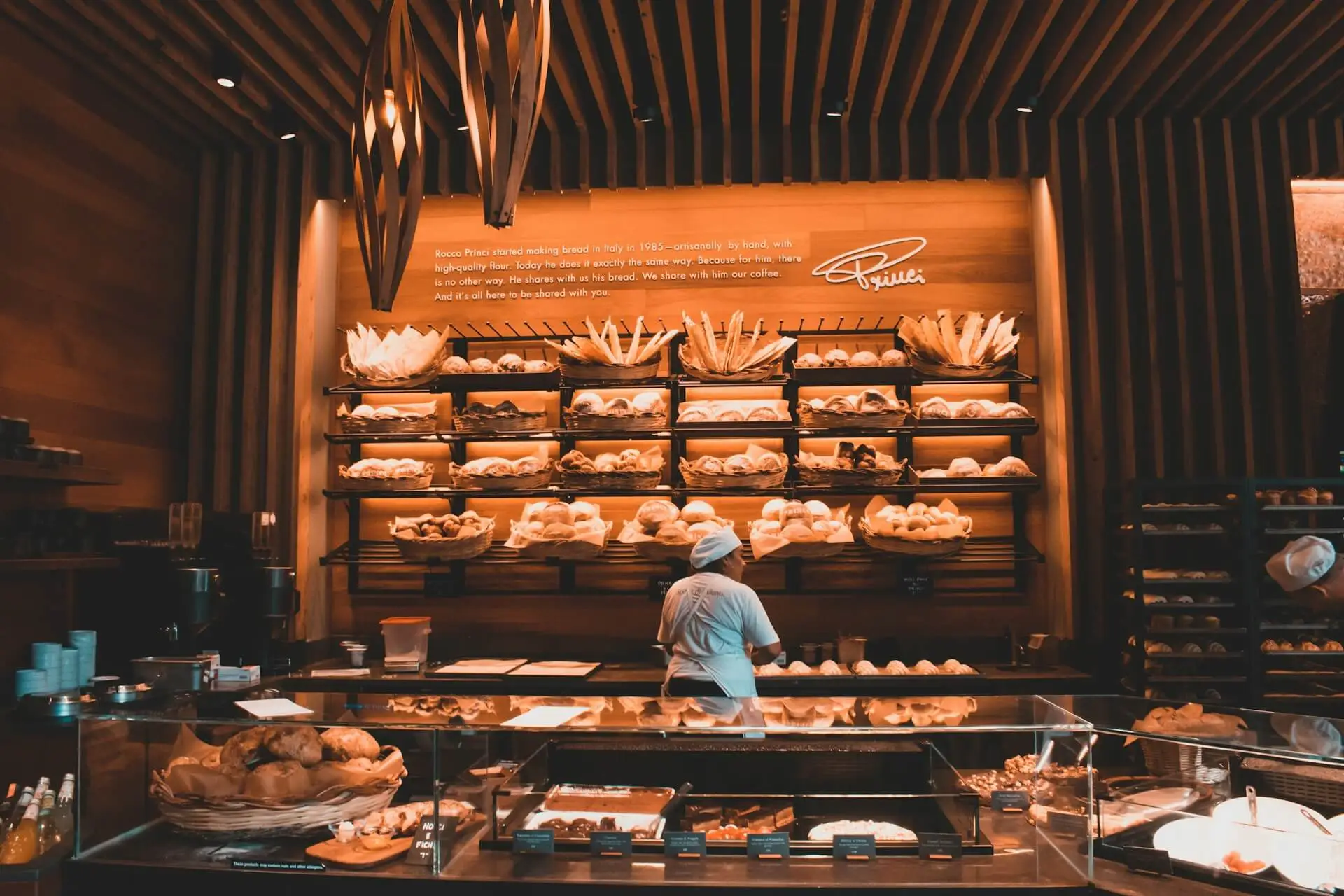
Selling a bakery means passing on much more than ovens, mixers and furniture. In an operating business there may be a bakehouse, a retail counter, employees, contracts with suppliers and professional clients, a commercial lease, permits, food safety procedures, a brand known locally and a customer base built over time.
This is why the price should not be set by simply adding up what the equipment cost or by applying a percentage to revenue. Before putting a bakery on the market, it pays to understand what is actually being transferred, how much the business generates, what costs the new owner will have to take on and which elements will continue to add value after a change of ownership.
Preparing these points before you look for a buyer also lets you answer questions more precisely and present the business transparently.
What selling a bakery involves and what the transfer includes
The sale can involve an organised, operating business made up of tangible and intangible assets that allow the activity to continue. So do not confuse the transfer of a bakery with simply selling its equipment.
The exact make-up varies from one business to another. A small shop that resells bread bought from outside producers is very different from a bakery with a bakehouse, in-house production, several employees and daily deliveries to bars, restaurants, hotels or other outlets.
Production bakery vs bread shop: key differences to consider
Even the official classification of economic activities distinguishes between bread production and retail sales. This difference has practical consequences when preparing a transfer.
In a bakery with in-house production, the bakehouse, plant, oven, mixers, cold rooms, production capacity and staff organisation carry more weight. In a shop focused mainly on sales, the location, footfall, commercial lease, product range and regular clientele can matter more.
Many businesses combine both models. Before going to market, explain clearly what share of revenue comes from production, from direct retail and, where applicable, from supplies to professional clients.
Equipment, goodwill, brand, recipes and clientele
A transfer can include very different elements. These may include ovens, mixers, fridges, cold rooms, counters, furniture, stock, signage, brand, domain name, online profiles and other assets used to run the activity.
Goodwill, local recognition, specific recipes, the production set-up, relationships with professional clients and other elements that help the business keep generating income after the handover can also be valuable.
However, saying the bakery is sold “complete” leaves too much room for interpretation. It is better to spell out exactly which assets and relationships are included in the deal and which are excluded.
Selling the business with or without the property
You also need to distinguish between selling the activity and selling the property where it operates. Many bakeries trade from leased premises, so the buyer acquires the business but not necessarily the real estate.
This difference should be clear from the outset because it affects the price, the documentation to be reviewed and the checks a potential buyer is likely to carry out.
How to prepare the bakery before putting it on the market
A potential buyer will try to understand whether they are acquiring a business that can keep running after the current owner steps away. Preparation should therefore start with data, documentation and internal organisation, not with posting the listing.
Organise the accounts, receipts and financial results
Revenue and profit alone do not tell the whole story. You should be able to reconstruct the trend in sales, main costs, staff costs, rent, utilities, raw materials purchases and any income from professional clients.
In a bakery it is especially useful to know how much work the owner does directly. If the owner works nights in the bakehouse and their cost does not show up like a normal employee, a buyer will need to calculate how much it would cost to replace them.
The same logic applies if family members help regularly. An apparently strong result can change once you rebuild the costs required for the bakery to run without the current owner.
Review the bakehouse, plant and equipment
You should not value a professional oven by its original purchase price alone. Its age, condition, maintenance, efficiency, capacity and any investments likely to be needed in the coming years all matter.
Before the sale it can help to prepare an inventory showing the brand, model, year of purchase and condition of the main equipment. Where available, collect documents related to maintenance or works carried out.
This does not mean you must replace every old machine before selling. It means enabling the buyer to understand what they are acquiring and what investments they might face afterwards.
Make recipes, processes and know-how transferable
Recipes known only to the owner, client relationships managed exclusively from their personal phone, or procedures that have never been documented can all make the transition harder.
A bakery that is easier to transfer has understandable shifts, identified suppliers, organised recipes and processes, defined responsibilities and accessible commercial information.
You do not need to turn a small craft business into a large corporate structure. It is simply useful to avoid forcing the new owner to rebuild the entire organisation from scratch the day after the transfer.
Review contracts, permits and documentation
Before starting negotiations, identify the key contracts and documents related to the activity. This lets you spot in advance any expiries, restrictions or situations that could delay the deal.
Items worth reviewing include the commercial lease, administrative and health documentation, employment relationships, contracts with key suppliers or clients and documents related to plant and equipment.
What a bakery is worth and how to set the asking price
There is no universal formula to value any Italian bakery. Two businesses with the same revenue can be worth very different amounts if one has better margins, recent machinery, sustainable rent and self-sufficient staff, while the other needs immediate investment and depends entirely on the owner.
Revenue, margins and the business’s real profitability
The valuation should start from the bakery’s ability to generate sustainable financial results. A buyer will try to understand how much is left after covering the costs needed to produce and sell: raw materials, staff, energy, rent, maintenance, services and other operating expenses.
The make-up of income also deserves attention. Revenue highly concentrated in a single professional client carries a different risk from sales spread across many retail customers.
Goodwill, clientele and the bakery’s reputation
A bakery that has been in the same area for many years may have built goodwill that does not show up in the equipment list. Location, signage recognition, purchase frequency, online reputation, relationships with restaurants and bars, well-loved recipes and a stable customer base can all add to the business’s value.
However, distinguish what truly belongs to the bakery from what depends on the owner personally. If all key clients buy because of an exclusively personal relationship, the change of owner carries greater risk.
Value of ovens, mixers and other equipment
The oven, mixer, divider, moulder, fridges and cold rooms can represent a significant share of the business’s assets, but their economic value does not necessarily match historical cost.
A buyer will also consider future investments. A machine that still works but is close to replacement is valued differently from recent, properly maintained equipment.
How location and the commercial lease affect value
For many bakeries, the retail counter directly influences earning capacity. A location with footfall near offices, schools or residential areas can be attractive, but it must be analysed together with the rent and remaining term of the commercial lease.
Strong revenue does not automatically compensate for rent that eats up an excessive share of the business’s margins.
Dependence on the owner and the baker
This is one of the biggest drivers of perceived risk. If the owner is also the only person able to carry out certain preparations, recipes or commercial relationships, the buyer will need to replace that expertise or plan for a handover period.
Where it makes sense for both sides, you can agree a transition and handover period as part of the negotiation.
Retail channels and B2B customers
A bakery that sells only to the public is set up differently from a business that also supplies hotels, restaurants, bars, canteens or shops.
In the latter case, analyse how much each client represents in revenue, the continuity of relationships and whether there are commercial agreements. Heavy concentration in a few clients can be a risk the buyer will want to assess.
What documents to prepare to sell a bakery
The documentation required depends on the business’s structure and how the transfer is carried out. Preparing the most likely information in advance can avoid many delays.
Financial and accounting documentation
The potential buyer may want to review financial statements, returns, ledgers or other accounting records appropriate to the type of business, along with information on key costs and sales trends.
The documentation should allow, as far as possible, a check of consistency between declared results and how the business actually operates.
Equipment list and maintenance records
Prepare an inventory of the main assets included in the transfer. For key equipment, indicate model, year, condition and known maintenance actions.
This reduces potential misunderstandings and helps the buyer better estimate future investments they may need to make.
SCIA, health documentation and the HACCP plan
A food business must comply with applicable administrative and hygiene-health obligations. When preparing the transfer, gather documentation related to the activity, communications made, health registration and the bakery’s self-monitoring procedures under its SCIA (certified notice of commencement of activity) and HACCP (Hazard Analysis and Critical Control Points) plan.
The specific documentation required for the subingreso (succession into an existing licensed activity) should be checked based on the municipality, region and the business’s actual characteristics.
Commercial lease and documents relating to the premises
If the bakery operates in leased premises, the lease becomes one of the most relevant documents in the negotiation. The buyer will want to know the rent, remaining term, contractual conditions and any elements that could affect business continuity.
Contracts with employees, suppliers and professional clients
Where they exist, identify employment relationships and major commercial contracts. Not all contracts necessarily receive the same treatment in a transfer, so check which can be assigned and on what terms.
Business transfer and subingreso: procedures to check in Italy
After agreeing the headline terms, it is not enough to hand over the keys to the premises. Transferring an organised activity requires you to coordinate the transfer deed with the administrative procedures the new owner needs to keep operating properly.
Communications and procedures via the SUAP
For bakeries, procedures may involve the competent SUAP (one-stop shop for productive activities) and the steps required for subingreso.
It is not correct to generalise based on the rules of a single municipality. Forms, fees, required documentation and procedures can vary by area.
Before fixing timelines and conditions for the transfer, check the procedure applicable with the SUAP for the territory where the bakery operates.
Subingreso and health obligations
Producing and selling food also involves health obligations. On a change of owner it may be necessary to update or file communications related to the registration of the food business and other applicable obligations.
The exact situation must be checked against the actual preparations carried out, how the bakehouse is set up and the procedures applicable in each territory.
Why procedures can vary by municipality and region
A bakery in one region should not assume that documentation and procedures are identical to those required in another. National rules are only part of the framework, which is supplemented by regional and municipal procedures.
This is why, before signing, you should verify which procedures are actually required for that specific business.
What happens to employees when the bakery is sold
When the deal constitutes a transfer of a business, workers cannot be treated as something to be removed automatically before the sale.
Continuity of employment relationships in a business transfer
Article 2112 of the Italian Civil Code states that, in the event of a business transfer, the employment relationship continues with the transferee and the worker retains the rights arising from it. The transfer, by itself, is not grounds for dismissal.
This point carries real weight in a bakery. Anyone assessing the purchase will want to know the number of employees, their roles, seniority, shifts, labour cost and the skills present in the bakehouse.
What information the seller should prepare
The seller should prepare a clear picture of the workforce and its costs, rather than treating staff as a detail to be addressed only at signing.
In businesses with a larger workforce, specific information and consultation obligations may also apply. The exact situation must be checked based on the size of the business and the planned transaction.
What happens to the commercial lease for the premises
Many bakeries do not own the property where they operate. The sale therefore affects the business, while the bakehouse and shop continue to be used under a commercial lease.
Business transfer and assignment of the lease
Italian law regulates the possibility of assigning the lease together with the business, setting out how to notify the landlord and the possibility of opposition in the cases provided by law.
This does not mean every lease should automatically be treated the same way. The real conditions must be analysed alongside the structure of the transfer and the content of the existing lease.
Rent, remaining term and conditions to review
For a potential buyer, the lease is one of the documents to review before deciding how much they are willing to pay.
At a minimum, review the rent, remaining term, indexation, deposit, permitted use of the premises and other conditions that could affect continuity of the business.
For this reason, do not wait until the last days of the negotiation to read the lease carefully.
Tax considerations when selling a bakery
The tax treatment of the transfer depends on several elements: the seller’s legal form, the deal structure, the composition of the business, the values attributed to assets and whether real estate is involved.
So it would not be correct to indicate a single percentage that applies to every bakery sale.
The cessione d'azienda (transfer of a going concern) is treated differently from an ordinary sale of individual assets. Any potential capital gain for the seller also needs to be analysed in relation to the deal structure and their tax position.
Before fixing the net amount you want to receive from the sale, have a commercialista (Italian tax adviser) or another qualified professional review the tax impact of the transfer.
How to write an effective listing to sell a bakery
A listing that is too vague forces the buyer to ask for basic information. One that is overly detailed can make public data that should be shared only with genuinely interested parties.
The description should let readers quickly understand what type of business is on offer: artisan bakery with bakehouse, bread shop, bakehouse with direct sales, bakery with pastry, point of sale without in-house production or a mixed model.
What information to include in the listing
Useful details include the area, location characteristics, shop and bakehouse size, whether the property is included in the sale, key equipment included, number of workers and the type of clientele.
Where applicable, also explain the presence of B2B sales, supplies to professional clients or other channels that have a material weight in revenue.
How to describe the bakehouse, equipment and point of sale
The buyer should be able to understand whether the bakehouse has the equipment needed to continue production and in what condition it is.
Be specific. Instead of writing “fully equipped bakehouse”, it is more useful to describe the main machines available and the characteristics of the spaces.
What financials to share and when
The price should be justifiable. If the asking price is based on profitability, location, equipment or established commercial relationships, the seller should be able to document these points at later stages.
However, you do not need to publish all the business’s financial data in an open listing. More sensitive information can be shared progressively with genuinely interested potential buyers.
Photos, location and the business’s strengths
Photos should show the point of sale, the bakehouse and equipment realistically. Dark, messy images or photos that only show the signage make it hard to understand how the bakery is set up.
Before posting photos of the bakehouse, check that documents, employee data or other confidential information are not visible.
How to protect confidential information
Margins, the full client list, special supplier terms, proprietary recipes or accounting documentation can be provided later in the negotiation.
The goal is to provide enough information to generate qualified interest without making public sensitive data that is not needed for an initial assessment.
Where to find potential buyers for a bakery
A bakery buyer could be another sector professional looking to expand, an experienced employee, an entrepreneur interested in acquiring an operating business or an investor who sees potential.
To reach these profiles, use professional word of mouth, local networks, sector contacts and marketplaces specialising in buying and selling businesses.
Your choice of channel should also reflect the level of confidentiality you want and the type of buyer you aim to reach.
What a potential buyer will check before buying the bakery
Looking at the bakery from the buyer’s perspective helps you prepare the sale better. Anyone assessing the acquisition will mainly look for consistency between what you say and what the documents show.
Consistency between revenue, margins and declared income
If the price is justified by profitability, the buyer will want to analyse income and costs. High revenue alone does not prove that the business delivers attractive financial results.
Condition of the bakehouse and machinery
If a significant share of the price relates to equipment, the buyer will likely want to check its condition, age and potential replacement needs.
Regular clientele and B2B contracts
If the listing mentions a loyal customer base, the buyer may want to understand how sales are distributed and how much they depend on particular clients.
Staff and dependence on the owner
A bakery that keeps running without the owner’s constant presence is perceived differently from a business where production, purchasing, sales and client relationships depend on a single person.
Lease, permits and compliance
The buyer may also review the lease situation, administrative and health obligations, any debts or obligations related to the business and whether existing activities can continue.
Preparing these points before you receive the first enquiries avoids turning every contact into a long document chase.
From negotiation to transferring the bakery
After the first contact, the seller and potential buyer can start a more detailed exchange of information. Not everyone who asks for information will reach the final stage, so it can help to move forward progressively.
Information requests and buyer screening
An initial phase can check genuine interest and general compatibility with the asking price. You can then share more detailed documentation.
Due diligence and documentation
The buyer may decide to carry out economic, tax, legal, employment, technical and administrative checks before committing definitively.
The depth of these reviews will depend on the size of the bakery, the structure of the transfer and the perceived level of risk.
Agreement on price and terms of the transfer
Once the parties reach agreement, they should define precisely the price, payment method, assets included, any stock, the transfer date, how contracts will be handled and other deal points.
The transfer of a business must be formalised in line with applicable rules. For contractual, tax and corporate aspects, notaries, commercialisti (Italian tax advisers), labour advisers or other professionals may be needed depending on the case.
Handover period and transfer of know-how
In some businesses it can be useful to agree a period during which the previous owner passes on operational know-how to the new owner.
The duration and conditions of this handover should be agreed by the parties. It can be especially useful where the owner directly manages recipes, production, suppliers or relationships with key clients.
traspasso.com does not intervene in the negotiation or in formalising the sale. Buyer and seller handle the deal directly and can use the professionals they need for contractual, tax, administrative and employment matters.
Mistakes to avoid when selling a bakery
One common mistake is starting from the price you want rather than the business’s numbers. Having invested heavily in the bakehouse does not automatically mean you can recover every euro. Buyers focus mainly on today’s situation and the bakery’s future ability to generate results.
Another mistake is to show only revenue. Without understanding costs, staff, rent and the owner’s operational role, that figure says little about real profitability.
Hiding problems that are easy to verify can also damage a negotiation. A machine that needs replacing, a lease close to expiry or heavy dependence on a single client will not disappear because they are not mentioned early on.
Finally, waiting until sales and organisation are already in clear decline can make the business harder to present. If you have decided to sell, preparing documentation, processes and information in good time lets you approach the market with a clearer situation.
Frequently asked questions about selling a bakery
How long does it take to sell a bakery?
There is no standard timeline. It depends on the asking price, profitability, location, condition of the bakehouse, the lease, the quality of the documentation and the number of compatible potential buyers. The checks and procedures required can also affect the duration of the deal.
How is a bakery’s value calculated?
Valuation can consider financial results, ability to generate profit, equipment, goodwill, clientele, location, rent, staff, dependence on the owner and future investments. There is no single multiple that applies to all bakeries.
What documents are needed to sell a bakery?
It depends on the type of deal, but relevant items may include financial and accounting documentation, the equipment inventory, the commercial lease, documents relating to employees, administrative procedures, health registration, hygiene-health documentation and contracts related to the activity.
Can you sell a bakery if the premises are leased?
Yes. You do not need to own the property to sell the business. Where the bakery operates from leased premises, the lease should be reviewed and the assignment or subrogation of the lease handled correctly in line with applicable rules.
What happens to employees when the owner changes?
Where the requirements for a business transfer are met, Article 2112 of the Italian Civil Code provides for continuity of the employment relationship with the transferee and preservation of the worker’s rights. The exact situation should be reviewed based on the deal and existing employment relationships.
What should the buyer check for the subingreso?
Procedures can vary by municipality, region and the activities actually carried out in the bakery. You must check with the competent SUAP the obligations related to subingreso and any health requirements tied to food production and sales.
Is the equipment included in the sale of the bakery?
Not necessarily. It depends on what is agreed. Prepare a detailed inventory stating which assets are transferred, their condition and any items excluded from the transfer.
What is the difference between selling a bakery with a bakehouse and a bread shop?
In everyday language the terms can be used similarly, but the actual activity can differ. A bakery with in-house production usually has a bakehouse, plant and production machinery, while a bread shop may focus mainly on retail sales. Before the transfer, describe the activities actually carried out and check the applicable requirements.
Want to sell your bakery?
If you are thinking of transferring your business, you can publish your bakery on traspasso.com to reach entrepreneurs, buyers and investors interested in acquiring operating businesses.
traspasso.com is a marketplace specialising in buying and selling businesses and in business transfers. The platform puts owners and potential buyers in direct contact. Assessing the opportunity, negotiating terms and formalising the transfer are handled by the parties, who can involve the professionals they consider necessary.